 Mutiara Phinisi Editorial Desk
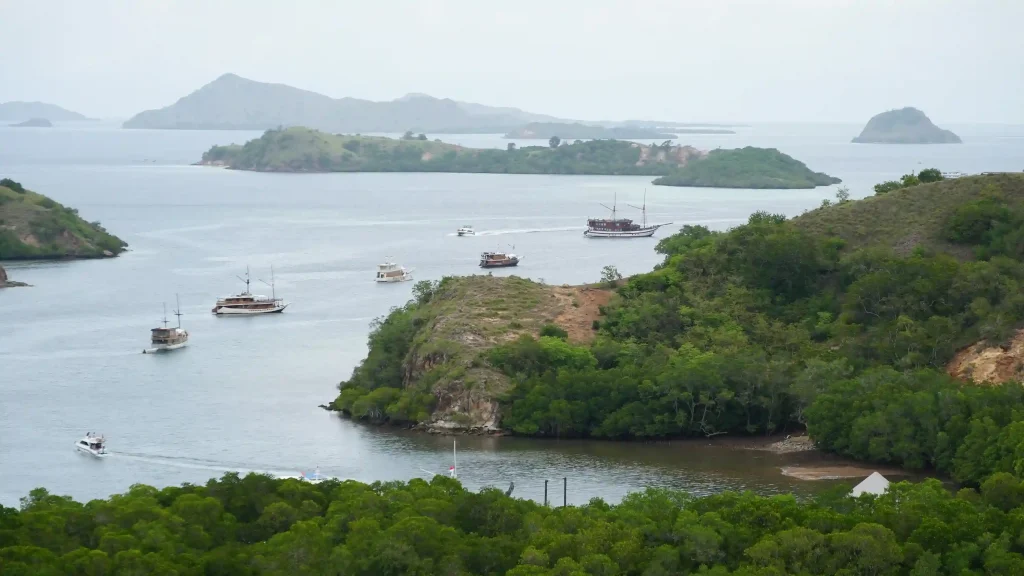
 A Komodo charter’s first night is almost always at Kalong, for the dusk flight of flying foxes, and the second in sheltered water near Siaba or Sebayur. The choice is not scenic — it is about shelter. Where a 47-metre phinisi drops anchor decides whether twenty-eight people sleep through the night or roll through it.
The anchorages a charter actually uses
| Anchorage | When used | Why |
|---|---|---|
| Kalong | Night one | Flying foxes leave the mangroves at dusk in their thousands; sheltered water; positions the boat for the overnight run to Padar |
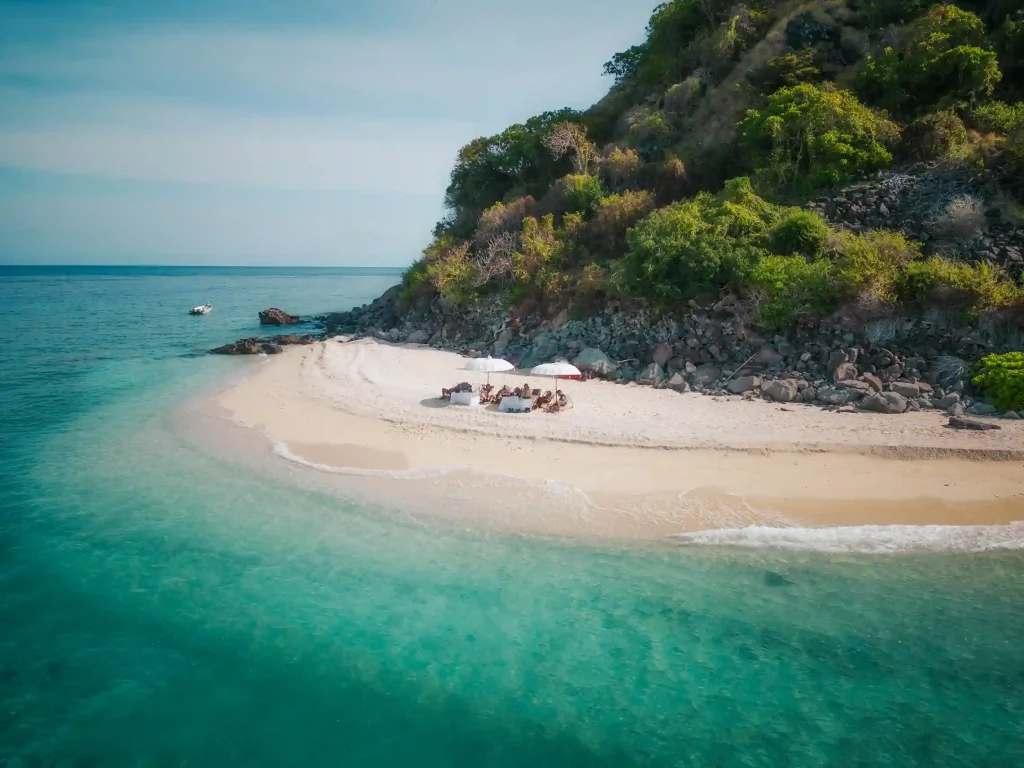
| Kelor | Day one, first stop | About one hour from Labuan Bajo — a short hill and clear snorkelling to start the trip |
| Manjarite | Day one, afternoon | Calm snorkelling bay between Kelor and Kalong |
| Siaba | Night two | Sheltered bay, 5–18 m, light to moderate current — turtles, macro life, a good night dive |
| Sebayur | Night two alternative | Soft-coral gardens, 5–30+ m, sheltered; close enough for an easy final morning |
| Kanawa | Final morning | About 1–1.5 hours from Labuan Bajo — the last swim before the run home |
Read that table as a route rather than a list. Day one moves the boat progressively away from town through calm water; night one at Kalong sets up the three-to-four hour passage to Padar; night two comes back into shelter for a comfortable final morning. It is a loop designed around where a heavy wooden vessel can sit safely overnight.
Kalong: the stop nobody skips
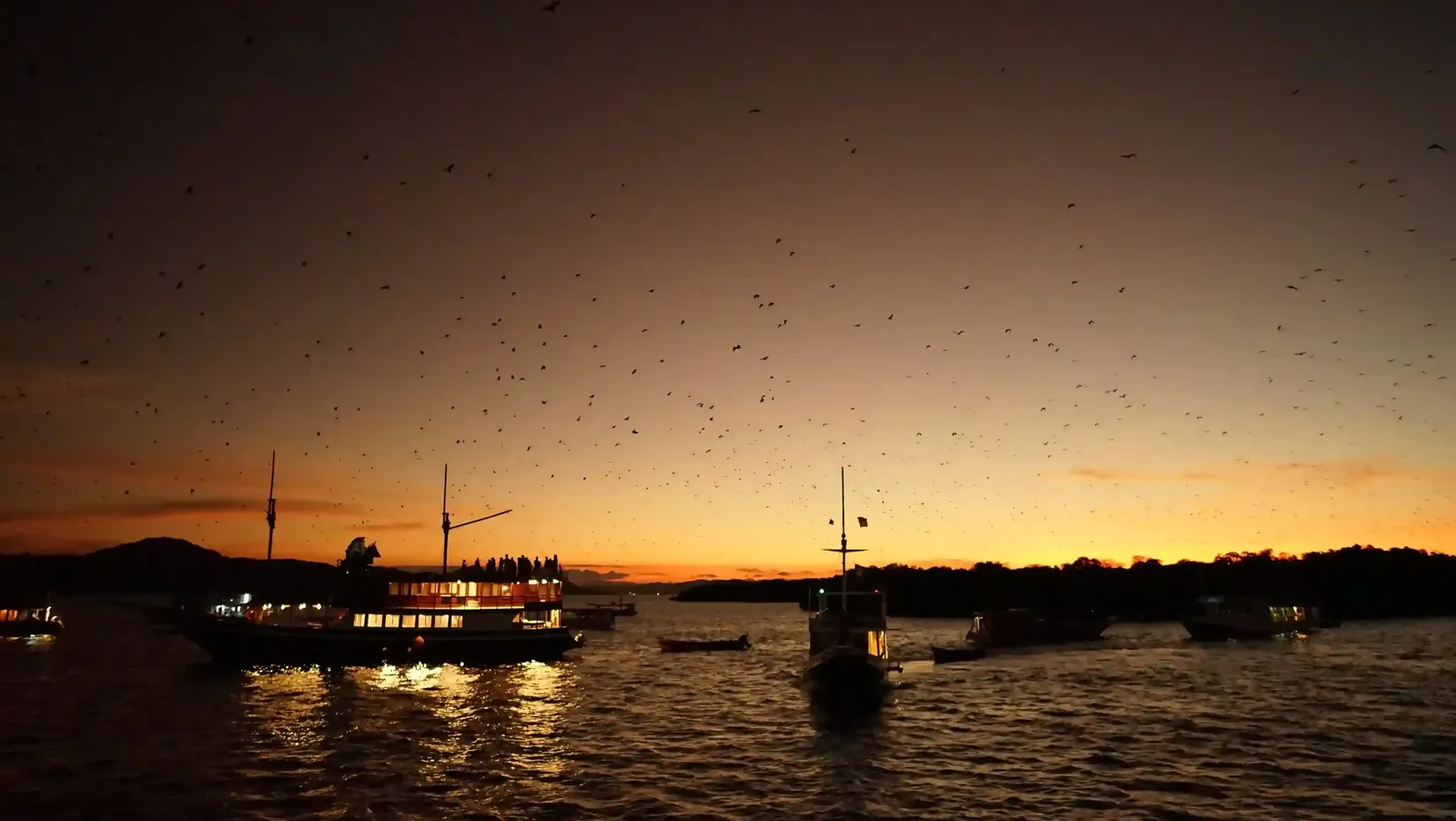
At dusk, thousands of flying foxes lift out of the mangroves on Kalong and cross the channel in a stream that takes many minutes to pass. It is the one moment on a Komodo itinerary that needs no explanation and no photograph to justify — and it happens on a schedule set by the sun, which is why every operator anchors there.
Getting there early also sets up the pre-dawn departure described in our Padar sunrise timing guide. What a private charter adds is the hour either side. A shared boat is feeding eighteen people to a galley timetable; a charter can push dinner back twenty minutes because the bats are late, or serve on the top deck instead of the saloon. Small freedoms, but they are the ones you remember.
Why shelter is a comfort decision, not a technical one
Mutiara Cruise Phinisi is 47 metres by 10.9 metres, built from Borneo Ulin ironwood and teak, with a Nissan RF10 440 PS main engine and two Mitsubishi generators — 60 KVA and 40 KVA, three-phase. It is a big, heavy, stable vessel. But mass does not stop roll at anchor: exposure does. A boat lying beam-on to swell in an open bay moves all night no matter how well built it is.
This is where a captain’s local knowledge earns its keep. Wind through the open straits changes through the night, particularly July to August, and the right anchorage at 18:00 is not always the right one at 02:00. Crews move. If you wake to the sound of the anchor coming up at midnight, that is the system working.
Which cabins feel the anchorage most
| Cabin type | Cabins | Guests | Bed | Balcony | View |
|---|---|---|---|---|---|
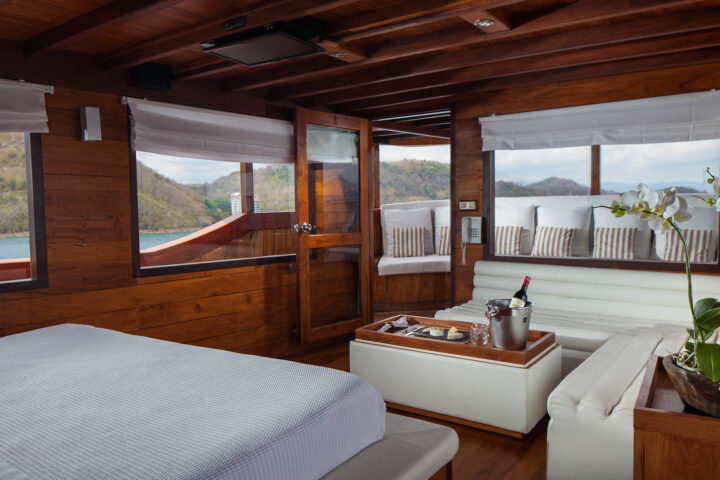
| Master Family Suite | 2 | 2 | King | Private balcony | Sea view |
| Master Suite | 2 | 3 | Queen | Private balcony | Sea view |
| Junior Suite | 2 | 2 | Queen | — | Porthole |
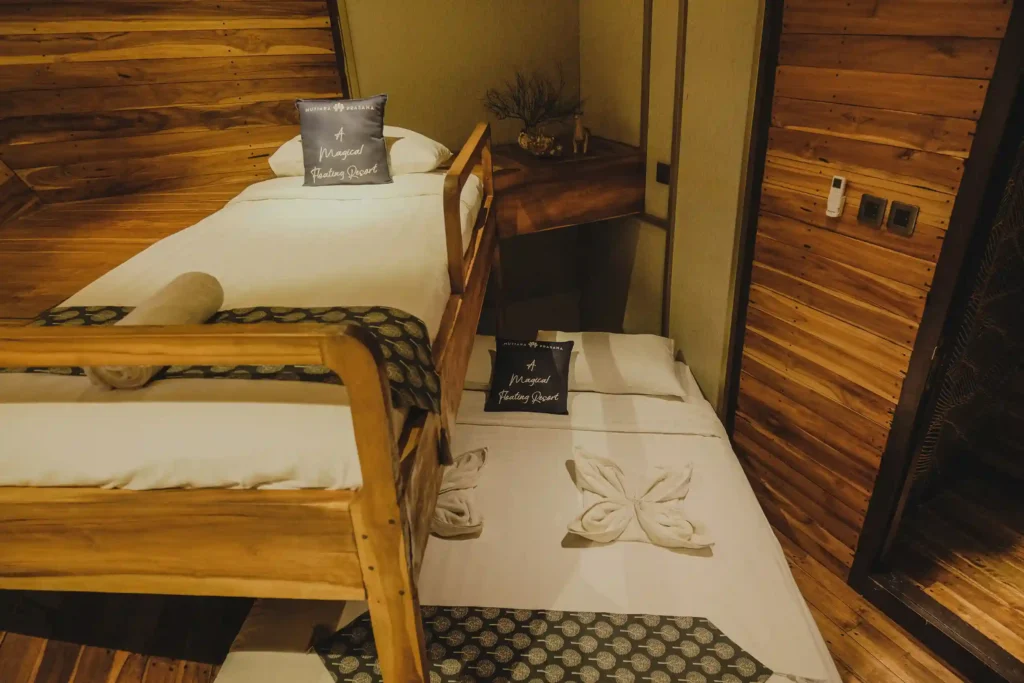
| Deluxe Triple | 2 | 3 | 2 single + 1 bunk | — | Porthole |
| Superior Triple | 2 | 3 | Queen + bunk | — | Porthole |
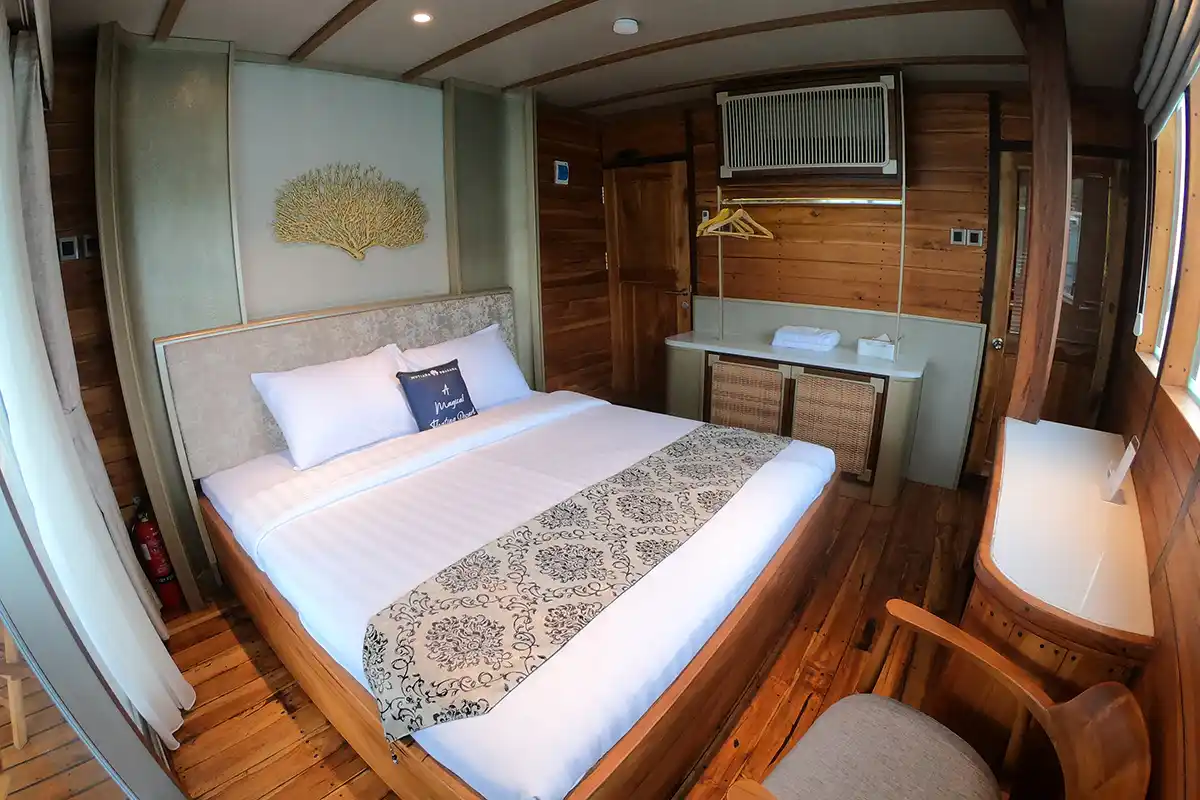
All ten cabins are air-conditioned and en-suite. Four are on the upper deck and six below. Upper-deck cabins with balconies get air and light; lower-deck cabins are closer to the waterline and to the boat’s centre of motion, which some guests find steadier. Which one suits a poor sleeper is covered in our guide to which cabins move least.
One honest arithmetic note that appears on the deck plan page: those five configurations add up to 26 berths against a published maximum of 28 guests. The final two places use extra bedding. If your group is 27 or 28, confirm the sleeping plan before you commit.
Night life aboard, in the literal sense
Siaba is a sheltered bay with light to moderate current at 5–18 metres and a sandy bottom around 20 — genuinely beginner-friendly, and a good night dive. A torch for night dives is on the vessel’s included list, which is a small detail that tells you the boat expects to be used that way. Turtles are common; the macro life is better than the site’s reputation suggests. For couples, the quiet second night at anchor is usually the evening people remember most, and the cabin choices behind that are covered on the honeymoon charter page.
Above the water, a 6,000-litre-per-day water maker means fresh-water showers are not rationed after a day of salt, and the three-phase generators run air conditioning through the night. These are unglamorous specifications that decide how the trip actually feels. What else is aboard, and what you still need to bring, is in our charter packing guide.
How the anchorages change with the season
April to June and September to November are the calmest, most predictable windows, and anchorage choice is straightforward. July and August bring wind through the open straits, which pushes crews towards more sheltered options. December to March is the monsoon — the roughest sea of the year, when shelter stops being a comfort question, some vessels go into maintenance, and itineraries need genuine flexibility built in. The month-by-month picture is on the 2027 charter calendar.
Checking a date
Availability for Mutiara Cruise Phinisi sits with the reservations desk at Komodo Luxury, the operator that markets and charters the vessel — trading since 2015 and part of Juara Holding Group. WhatsApp +62 811 3823 875 is quickest for a date hold; sales@komodoluxury.com is better when you want the quote, contract and invoice in writing.
Rate and specification figures on this page come from the operator’s published Mutiara Cruise Phinisi listing and were checked on 1 August 2026. Charter rates are reviewed annually. Ask for the current sheet in writing before paying anything.
Frequently asked questions
Where do Komodo liveaboards anchor at night?
Most first nights are at Kalong for the dusk flying-fox flight, which also positions the boat for the three-to-four hour overnight passage to Padar. Second nights are usually in sheltered water near Siaba or Sebayur.
What is Kalong Island famous for?
Thousands of flying foxes leaving the mangroves at dusk and crossing the channel in a stream that takes several minutes to pass. It is on virtually every Komodo itinerary because the timing is set by sunset rather than by any schedule.
Does a phinisi rock at anchor overnight?
It depends on exposure, not on the boat’s size. A sheltered anchorage is calm; an exposed one moves regardless of how heavy the vessel is. Crews will reposition during the night if the wind shifts, which is normal practice rather than a problem.
Are the cabins air-conditioned all night?
Yes. All ten cabins are air-conditioned and en-suite, run off Mitsubishi generators of 60 KVA and 40 KVA in three-phase configuration, and the vessel carries a water maker rated at 6,000 litres per day.
Can you dive at night on a Komodo charter?
Yes, and Siaba is the usual choice — a sheltered bay at 5–18 metres with light to moderate current, suitable for beginners. A torch for night dives is on the vessel’s included equipment list.
Choosing a boat that can actually reach these quiet anchorages matters, so it helps to compare the private phinisi vessels that run these overnight Komodo routes. See a private phinisi charter for Komodo.