 Mutiara Phinisi Editorial Desk
 Motion is felt least low and central — the lower-deck cabins near the middle of a 47-metre phinisi move less than the upper-deck balcony suites at either end. On a standard Komodo itinerary only two legs are genuinely exposed: the overnight run to Padar and any crossing of the open straits. December to March is the roughest window of the year.
Where motion is felt on this vessel
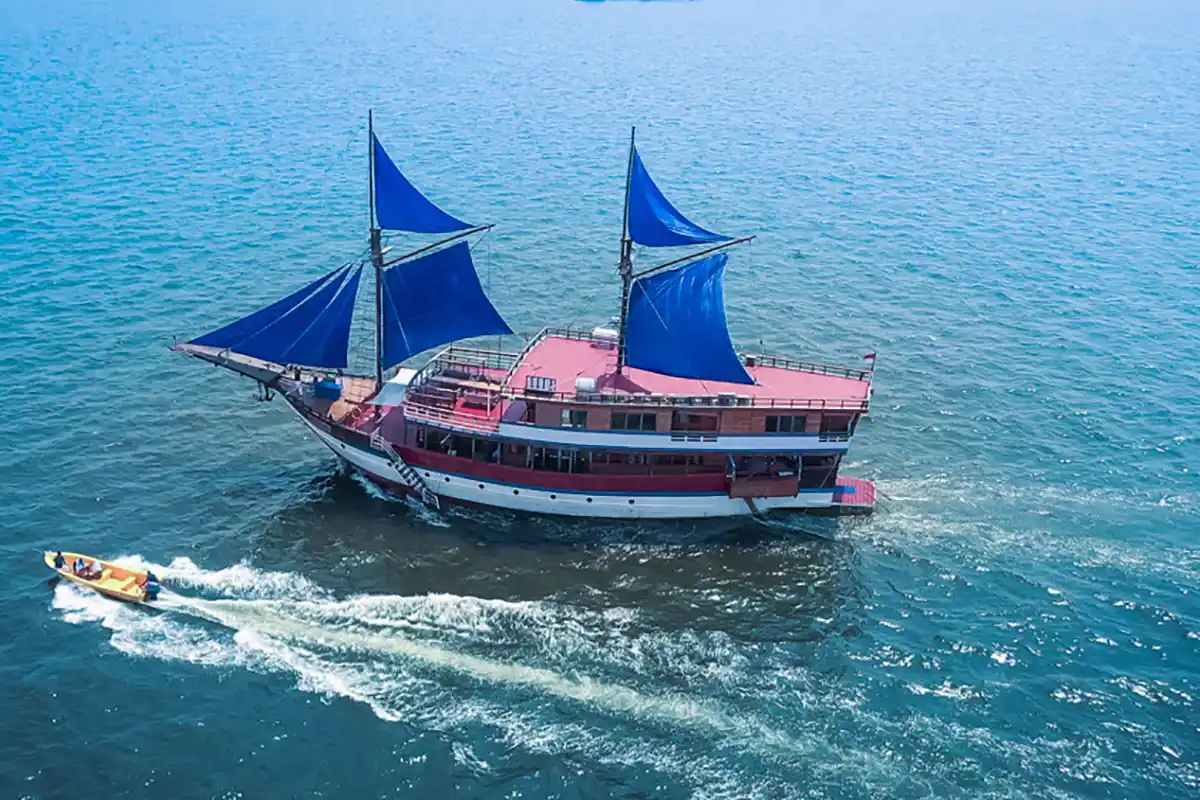
Mutiara Cruise Phinisi is 47 metres long with a 10.9-metre beam, built in Borneo Ulin ironwood and teak. Beam that wide relative to length is inherently stable — one reason traditional phinisi hulls are used for this work at all. But every boat pitches around its centre, and cabins far from that centre move more.
| Cabin type | Deck | Guests | Bed | Motion profile |
|---|---|---|---|---|
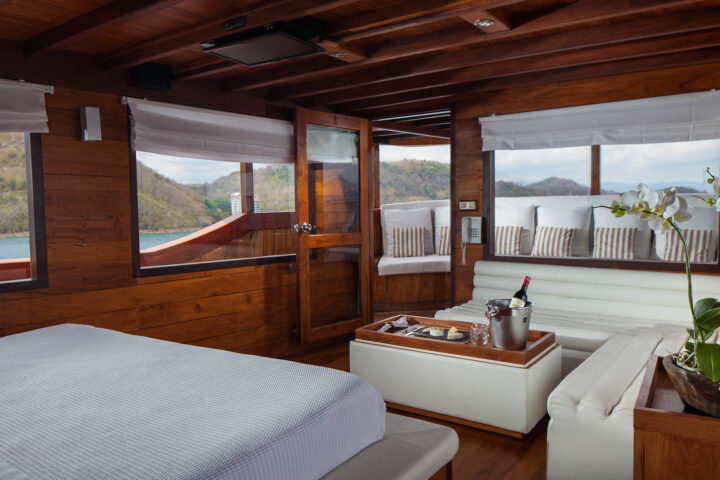
| Master Family Suite | Upper | 2 | King, private balcony | Most air and light; more motion in swell |
| Master Suite | Upper | 3 | Queen, private balcony | As above |
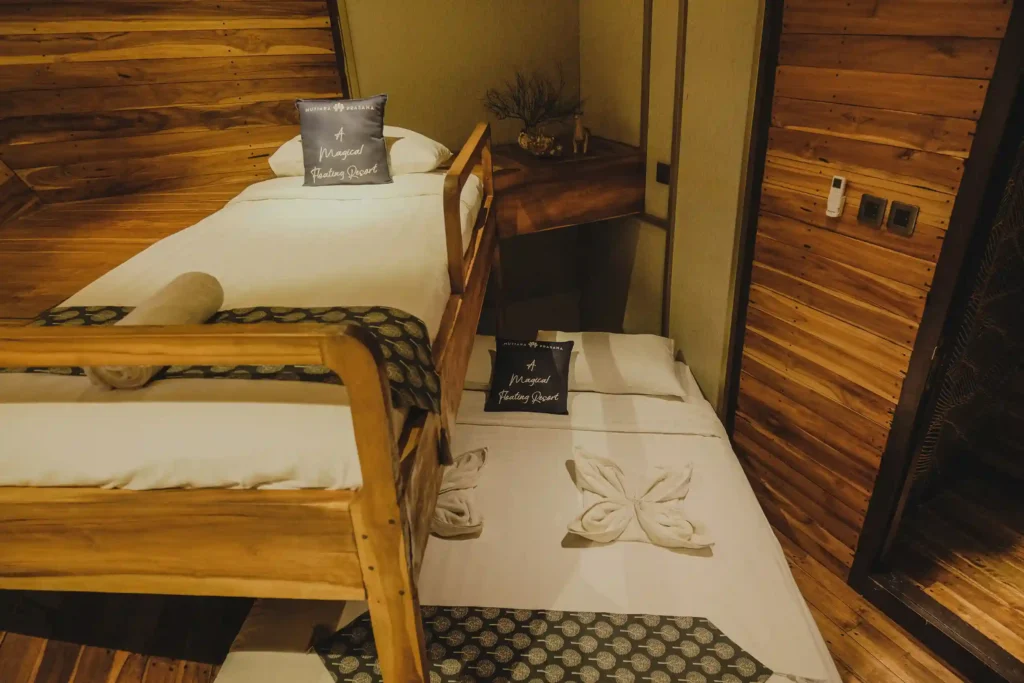
| Junior Suite | Lower | 2 | Queen, porthole | Closer to the waterline; steadier |
| Deluxe Triple | Lower | 3 | 2 single + bunk | Steadier |
| Superior Triple | Lower | 3 | Queen + bunk | Steadier |
Four cabins are on the upper deck and six below. The trade is real and worth stating plainly: upper-deck suites give you a balcony, sea views and fresh air; lower-deck cabins give you a quieter night in a swell. If someone in your group is a bad sailor, put them below and give the balcony to someone who is not. All ten cabins are air-conditioned and en-suite either way.
Which legs are actually rough
| Leg | Approximate time | Exposure |
|---|---|---|
| Labuan Bajo → Kelor | About 1 hour | Sheltered |
| Kelor → Manjarite → Kalong | About 1.5–2 hours total | Mostly sheltered |
| Kalong → Padar, overnight | About 3–4 hours | The longest passage; run at night deliberately |
| Padar → Pink Beach | About 1–1.5 hours | Moderate |
| Open-strait crossings | Varies | Windiest in July–August |
| Siaba → Kanawa → Labuan Bajo | About 2–3 hours total | Sheltered |
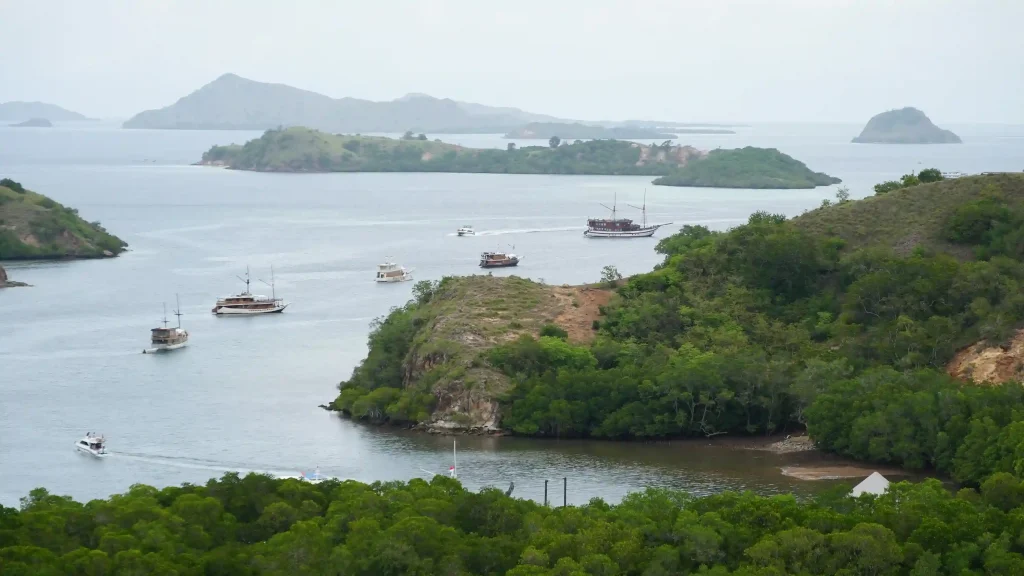
Notice that the itinerary is largely a sequence of short hops between sheltered anchorages. The one substantial passage — Kalong to Padar — is scheduled overnight, which is partly about morning light and partly about the fact that people who are asleep do not get seasick.
What actually helps, and what does not
- Take medication before you feel anything. Most remedies are preventive, not curative. Taken after nausea starts they achieve very little.
- Get on deck and look at the horizon. The single most effective free intervention. Below deck with a phone is the worst combination available.
- Eat something dry and keep drinking water. An empty stomach makes it worse, and dehydration makes it much worse. Fresh water is not rationed — the vessel makes 6,000 litres a day.
- Stay mid-vessel during passages. The bow moves most; the middle moves least.
- Skip alcohol the night before a long leg. Alcohol is not included in the rate anyway, and it substantially worsens motion sickness.
Bring your own preferred remedy. Do not assume the boat carries the specific brand that works for you, and mention any tendency to reservations before departure so the crew can allocate a cabin sensibly.
The season question, answered honestly
| Period | Sea | Comfort verdict |
|---|---|---|
| April–June | Calmest water, best visibility | Best window for anyone prone to motion sickness |
| July–August | Good visibility, wind in the open straits and around Padar | Comfortable at anchor, choppier on crossings |
| September–November | Calm again, strong visibility | Equal to April–June, with fewer boats |
| December–March | Monsoon, roughest sea of the year | Not the window for a nervous sailor, despite peak manta season |
If seasickness is a serious concern for anyone in your group, book April to June or September to November. The published force majeure position provides no refund for weather disruption, so choosing a calm window is a commercial decision as much as a comfort one. The full month-by-month picture is in the 2027 charter calendar.

The advantage a charter has here
On a shared boat a rough passage happens on the schedule. On a private charter the captain can delay a departure by an hour to let wind drop, take a longer sheltered route, or reorder the day so the exposed leg runs in better conditions — Manta Point and Taka Makassar already trade places routinely depending on current and wind. That flexibility is worth more to a queasy passenger than any tablet.
Which cabin to request, and the honest berth arithmetic behind a 28-guest maximum, is on the deck plan page. For couples deciding between a balcony suite and a steadier lower cabin, the trade-offs are also discussed on the honeymoon charter page.
Talking to a human about this
None of this is worth guessing at. The reservations team at Komodo Luxury — operator of Mutiara Cruise Phinisi since the vessel joined the fleet, company trading since 2015 — will confirm what applies to your dates. WhatsApp +62 811 3823 875, or email sales@komodoluxury.com for anything you want on paper.
Rate and specification figures on this page come from the operator’s published Mutiara Cruise Phinisi listing and were checked on 1 August 2026. Charter rates are reviewed annually. Ask for the current sheet in writing before paying anything.
Frequently asked questions
Which cabin is best if you get seasick?
A lower-deck cabin near the middle of the vessel. On this phinisi the six lower-deck cabins — the Junior Suites, Deluxe Triples and Superior Triples — sit closer to the waterline and move less than the four upper-deck balcony suites.
Is the sea rough in Komodo National Park?
Mostly it is a sequence of short hops between sheltered anchorages. The exceptions are the three-to-four hour Kalong to Padar passage, which is deliberately run overnight, and the open straits, which are windiest in July and August.
When is the calmest time to sail in Komodo?
April to June and September to November both offer the calmest water and strongest visibility of the year. December to March is the monsoon and the roughest sea, despite being peak manta season.
Does the boat provide seasickness tablets?
Do not rely on it. Bring your preferred remedy, take it before you feel anything rather than after, and tell reservations in advance so the crew can allocate a steadier cabin.
Do big wooden phinisi boats move less than small boats?
Generally yes — a 47-metre hull with a 10.9-metre beam is far more stable than a small day boat. But size does not eliminate motion, and where you are on the vessel matters more than the vessel’s length.