 Mutiara Phinisi Editorial Desk
 Take the published whole-boat nightly rate — one rate for the entire vessel — and divide it by your headcount. That is the whole calculation. With 28 guests aboard, each person carries a twenty-eighth of the rate; with 16, a sixteenth. Every per-person figure on this page is that single published rate divided by a number of people. There are no per-person supplements hiding behind the arithmetic, and the rate does not climb because your group is large.
Last updated: August 16, 2026
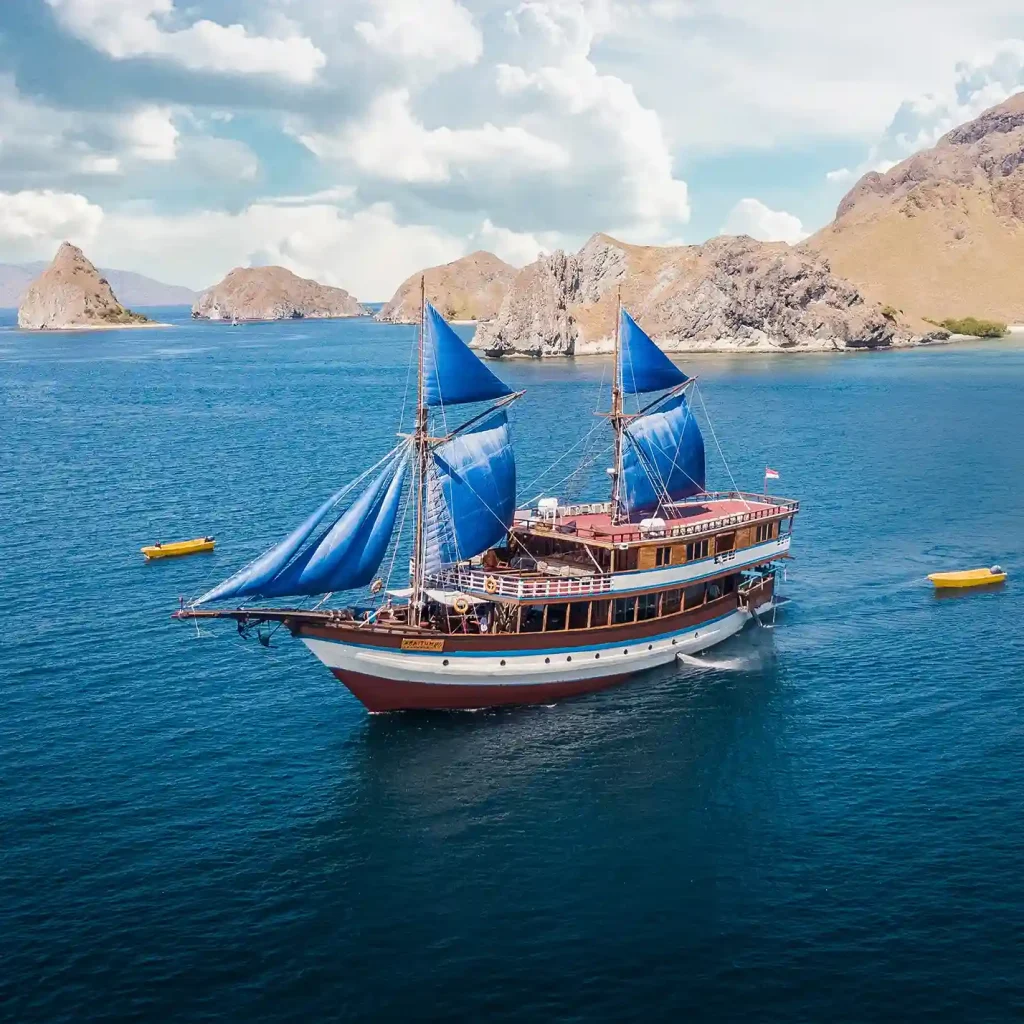
Mutiara is the largest-capacity vessel in her fleet: a 47-metre phinisi — the traditional wooden ship type still built by hand in Bulukumba, South Sulawesi — with ten cabins, a deck jacuzzi, and room for up to 28 guests. She sails Komodo National Park exclusively as private whole-boat charter, part of the fleet operated by Komodo Luxury — a registered Indonesian PT under Juara Holding Group Limited with 1,500+ verified guest reviews (4.9/5). That capacity is the reason groups of 16 to 28 — wedding parties, extended families, company retreats — tend to end up on our deck plan rather than splitting themselves across two or three smaller boats.
One Rate for the Whole Boat, Not a Rate Per Head
Most Komodo liveaboard pricing is quoted per person in a shared cabin, which makes small-group budgeting easy and large-group budgeting misleading. A whole-boat charter inverts the logic. The whole-boat rate buys the entire vessel: all ten cabins, the crew, the galley, the tenders, the jacuzzi, and every square metre of teak between bow and stern. Your cost per person is simply that rate divided by however many people you bring, up to 28. The boat costs the same whether you fill every berth or leave four empty — and that one fact drives every planning decision that follows.
The Table: Per-Person Share at 16 to 28 Guests
Each row below shows the fraction of the whole-boat nightly rate that one guest carries at a given headcount. It covers one night; multiply by your number of nights for the trip total. Request the current whole-boat rate from the charter desk, divide by your headcount, and nothing else is added or assumed.
| Guests aboard | Share of the nightly rate, per person |
|---|---|
| 16 | 1/16 — about 6.3% |
| 18 | 1/18 — about 5.6% |
| 20 | 1/20 — 5.0% |
| 22 | 1/22 — about 4.5% |
| 24 | 1/24 — about 4.2% |
| 26 | 1/26 — about 3.8% |
| 28 | 1/28 — about 3.6% |
Read it as a whole and one thing stands out: growing a manifest from 16 to 28 cuts each person’s share of the rate by roughly 43 percent.
Why the curve flattens at the top
The savings from each additional guest shrink as the divisor grows: the drop from 16 to 20 people is steep, the drop from 24 to 28 is gentle. In practice this means a group of 22 that is debating whether to chase two more RSVPs should relax — the per-person difference is real but modest. A group of 16 debating whether to grow to 20, on the other hand, has a genuine financial incentive to send a few more invitations. This is also why we tell organisers to lock the boat first and finalise the manifest second: the rate is fixed, so late additions only ever make the arithmetic kinder.
Private Whole-Boat vs Shared Cabins: The Break-Even Logic
Shared-cabin liveaboards quote per person, and that rate stays put no matter how many friends you bring. A private charter’s per-person cost falls with every name added to the manifest. Somewhere along the curve the two lines cross — our published break-even analysis walks through it cabin class by cabin class, and the exact crossing point depends on which shared vessel you compare against. What the raw comparison always leaves out is what the private figure includes: the itinerary is yours to bend, dinner is served when your group is hungry, the dive and trekking schedule answers to nobody else, and no stranger is holding the jacuzzi. For a group of 20 or more, the honest summary is that private charter stops being the extravagant option and starts being the orderly one. If you want to see how vessel classes stack up before committing to the big-boat route, the Komodo boat charter catalogue lays the alternatives out side by side.
What Ten Cabins Actually Do for a Group of 28
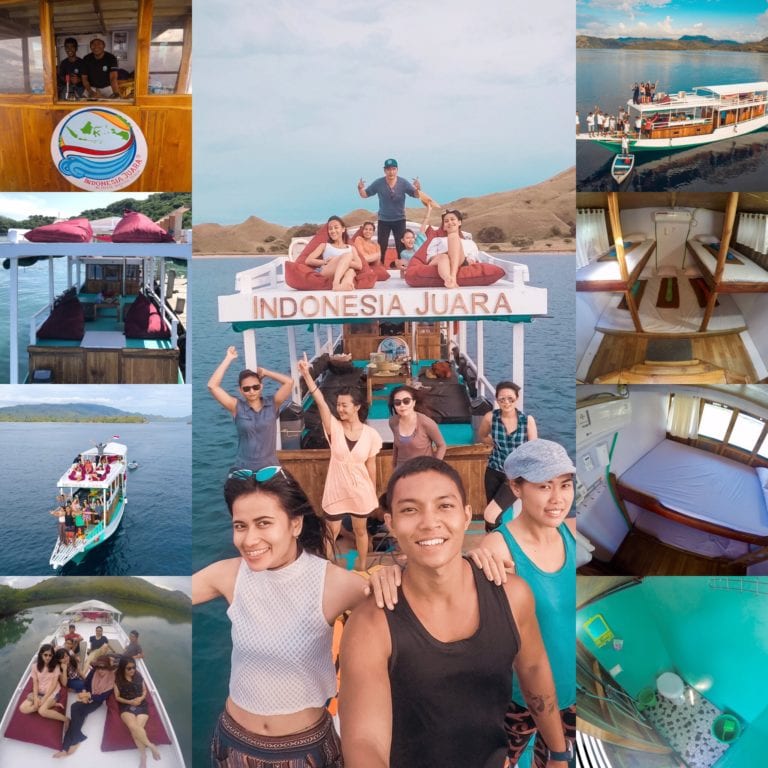
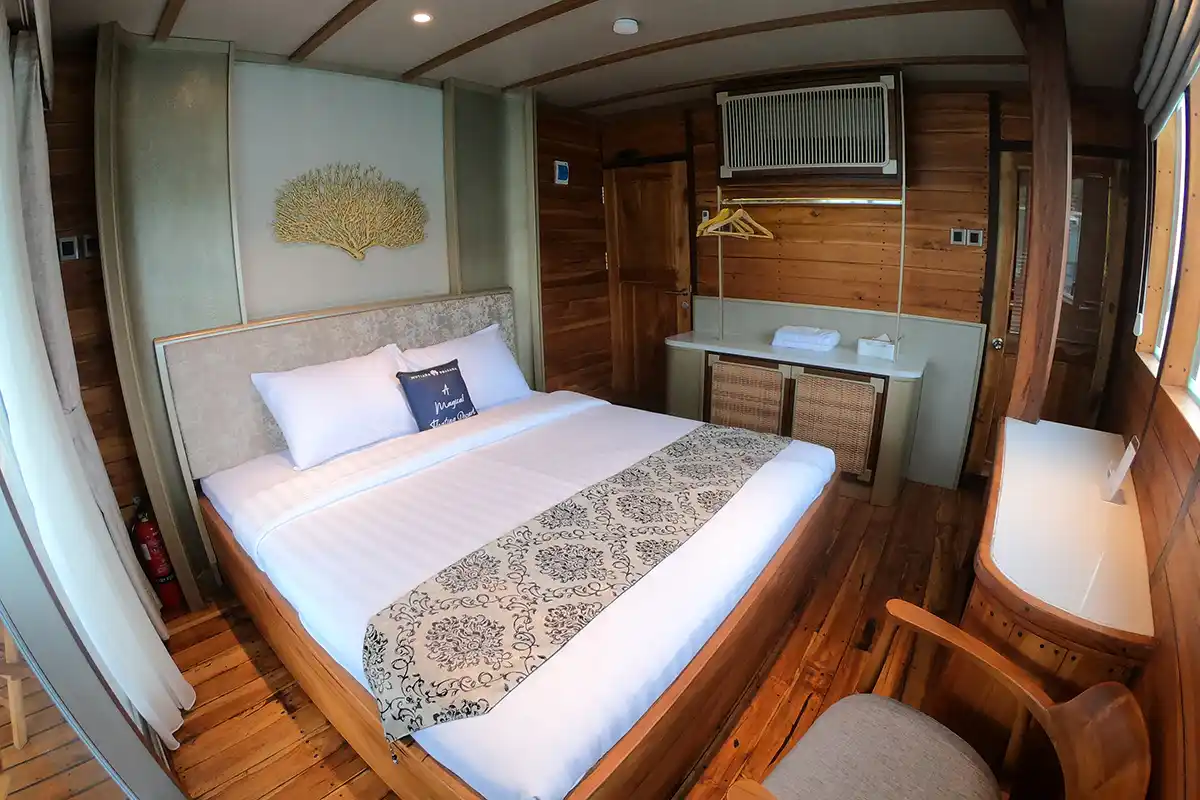
Capacity numbers on paper hide the thing organisers care about: who sleeps where. Mutiara’s ten cabins run in double, twin and family configurations, which is what lets 28 guests board without anyone sleeping in a corridor. At 16 guests, couples take a cabin each and nobody shares with someone they didn’t choose. At 28, the deck plan works because a 47-metre hull gives the group somewhere to disperse in daylight — sunbeds forward, dining amidships, jacuzzi aft — so cabins are for sleeping, not hiding. Wedding parties usually give the couple the best cabin and cluster families by deck; corporate groups tend to run twin-share and treat the saloon as a floating boardroom. Both work. If your final headcount lands well below 16, we will say so plainly: a boat this size may be more ship than you need, and Neptune Cruise, a sister vessel in the same fleet, or Yumana, another sister vessel in the same fleet, will fit a smaller party more sensibly.
Permits, the 1,000-Visitor Cap, and Why One Manifest Beats Three
Komodo National Park caps entries at 1,000 visitors per day. For a honeymooning couple this is background noise. For 28 people it is the single most important logistical fact of the trip. Split your group across three small boats with three different operators and you need three sets of park permits aligned on the same dates, three ranger allocations, and three captains agreeing on a rendezvous. On one vessel under one operator, you are one manifest: one permit application, one itinerary filed, one departure. The charter desk at Komodo Luxury handles the park paperwork for the entire group as a single unit, which is worth arranging early in high season now that daily entries are finite. The land side of a big group — pre-departure hotel nights, a first dinner together in town, staggered arrivals — is covered in the Labuan Bajo luxury travel guide.
The August 15 Earthquake, Answered Plainly
On August 15, 2026, a magnitude 7.7 earthquake struck the region. No destructive tsunami followed — the highest recorded wave was 0.36 metres — and Komodo National Park reopened the same day. Charter operations run on normal schedules, and 2027 group planning is proceeding exactly as it was on August 14. Groups organising a year out deserve facts rather than mood, so here is the fact: the park assessed, reopened, and moved on within the day.
Frequently Asked Questions
Does the whole-boat nightly rate change with group size?
No. It is one rate for the entire vessel, identical for 16 guests or 28. Only the per-person division changes, which is why larger manifests always produce a friendlier number.
Is a private phinisi cheaper per person than shared cabins for a large group?
The private per-person figure falls as headcount rises while shared-cabin rates stay flat, so the lines cross as groups grow. The exact break-even depends on the shared vessel you compare against — and the private figure buys the entire boat, not a berth on someone else’s schedule.
Can 28 guests really sleep comfortably in ten cabins?
Yes. The cabins run in double, twin and family configurations, and 47 metres of deck means the group spreads out by day. Cabins are for sleeping; the ship is for everything else.
How does the 1,000-visitor daily cap affect a 28-person charter?
Your group consumes 28 of the day’s 1,000 park entries, filed as one manifest under one operator. That is far simpler than coordinating permits across several small boats, but it rewards early planning in high season.
Is Komodo open after the August 2026 earthquake?
Yes. The magnitude 7.7 event on August 15, 2026 produced no destructive tsunami — the highest recorded wave was 0.36 metres — and the national park reopened the same day.
Should we fix the guest list before reserving the boat?
No — reserve the vessel and dates first. The rate is fixed for the whole boat, so guests added later only lower everyone’s per-person share; a shrinking list is the only thing that raises it.