 Mutiara Phinisi Editorial Desk
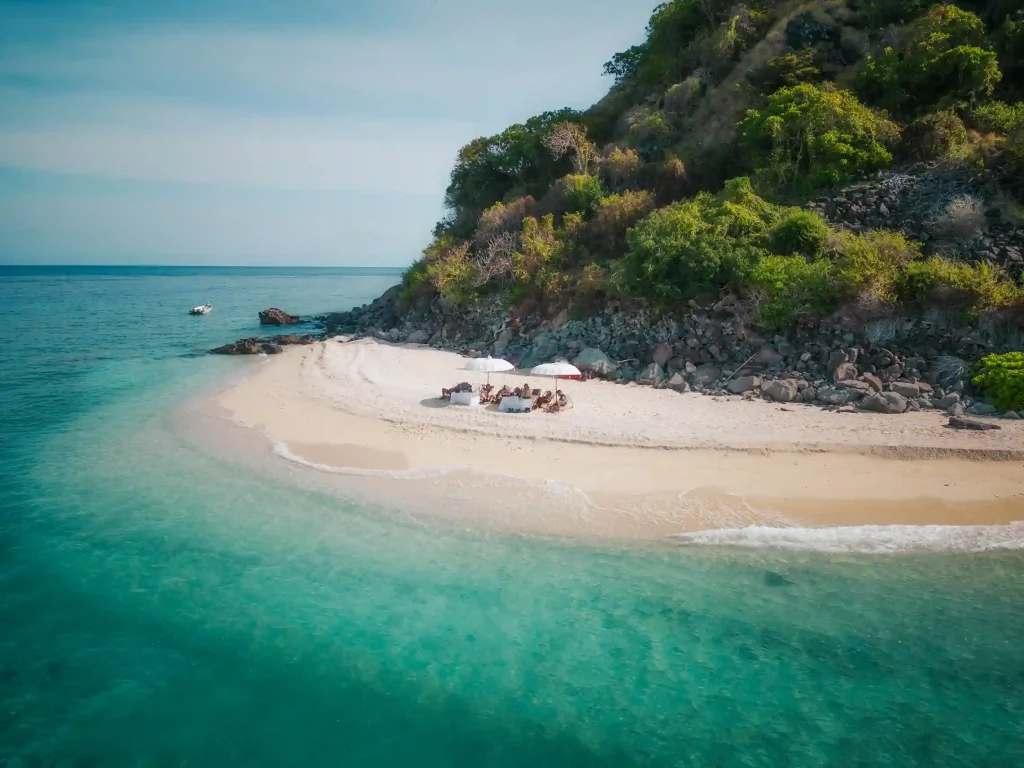
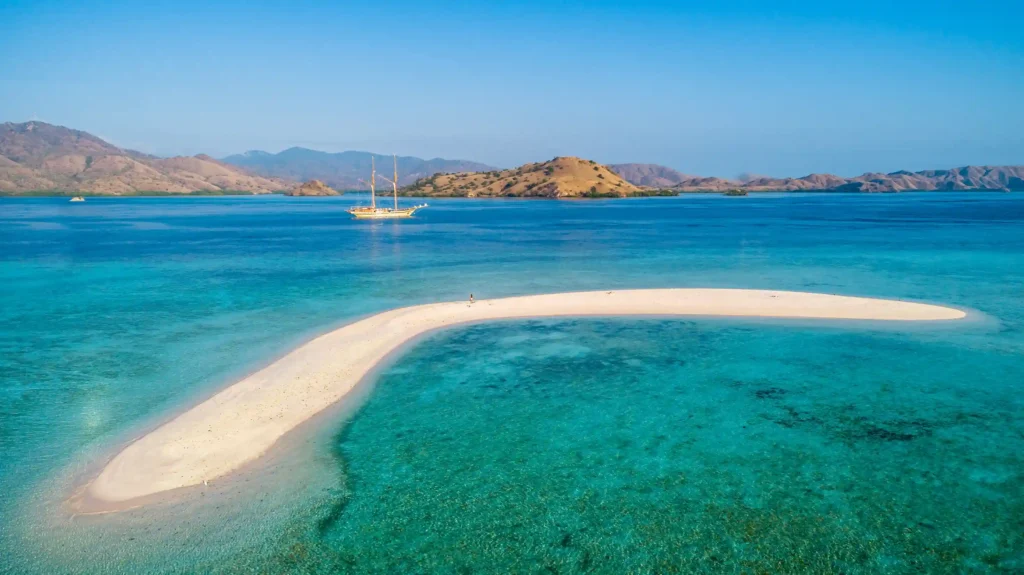
 Taka Makassar is a tidal sandbar that shrinks and disappears as the water rises, and Pink Beach reads pinkest in low, angled light rather than at midday. Both stops are 20–90 minutes from Manta Point and both are ruined by arriving with the fleet at noon. A private charter’s advantage here is entirely about hours.
Two stops, two completely different problems
| Stop | Governed by | Best conditions | Diving and snorkelling |
|---|---|---|---|
| Taka Makassar | Tide — it is a sandbar, not an island | Lower water, when the crescent of sand is fully exposed | Shallow reef edge; easy snorkelling |
| Pink Beach | Sun angle and crowd volume | Early morning or late afternoon, low angled light | 5–20 m, light to moderate current, all levels; shallow coral garden, anthias, turtles |
Taka Makassar has no schedule you can negotiate with. It is a bank of sand in open water: at low tide a bright crescent you can walk; at high tide barely there. Every boat in the park visits it, but only the ones that can move their own clock visit it when it is at its best.
Pink Beach has the opposite problem. The colour — coral fragments mixed through white sand — is a lighting effect as much as a geological one. In hard midday sun it washes out, which is exactly when the shared fleet arrives, having left Labuan Bajo on published 10:00 and 10:30 departures.
The sequence, and why it moves
| Leg | Approximate time |
|---|---|
| Padar → Pink Beach | About 1–1.5 hours |
| Pink Beach → Komodo Island | About 30–60 minutes |
| Komodo → Manta Point (Karang Makassar) | About 30–60 minutes |
| Manta Point → Taka Makassar | About 20–30 minutes |
| Taka Makassar → Siaba | About 1–1.5 hours |
Manta Point and Taka Makassar sit twenty to thirty minutes apart and routinely swap places in the day’s order depending on current and wind. That swap is not indecision — it is the correct response to conditions, and it is one of the concrete freedoms a private charter has that a shared boat on a fixed programme does not. The manta side of that decision is covered in our Manta Point timing guide.
What a charter does with those hours
Three moves, all of them unavailable on a shared itinerary:
- Take Pink Beach at 07:30 or 16:30 rather than 12:00. Lower sun, better colour, a fraction of the people.
- Have the crew check the tide before committing to Taka Makassar. If the sandbar is submerged, the stop moves rather than being wasted.
- Stay. A shared boat leaves when the schedule says. A charter leaves when your group has finished swimming.
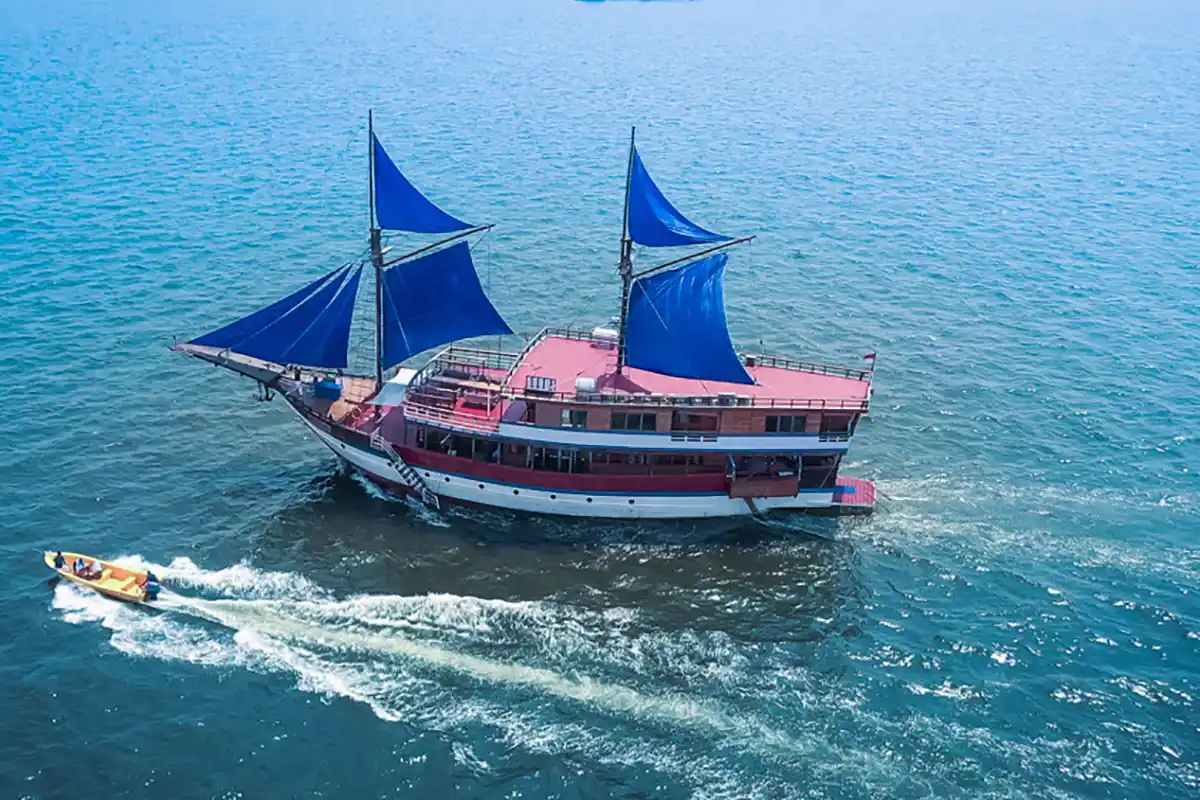
None of this is exotic. It is simply what happens when the vessel answers to one group instead of a timetable, and it is the practical content of the phrase “private charter”. The wider timing playbook is on the crowd-avoidance page.
In the water: honest expectations
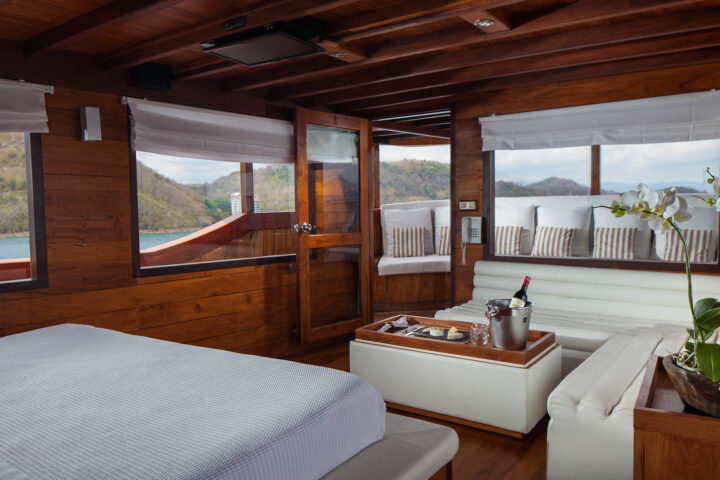
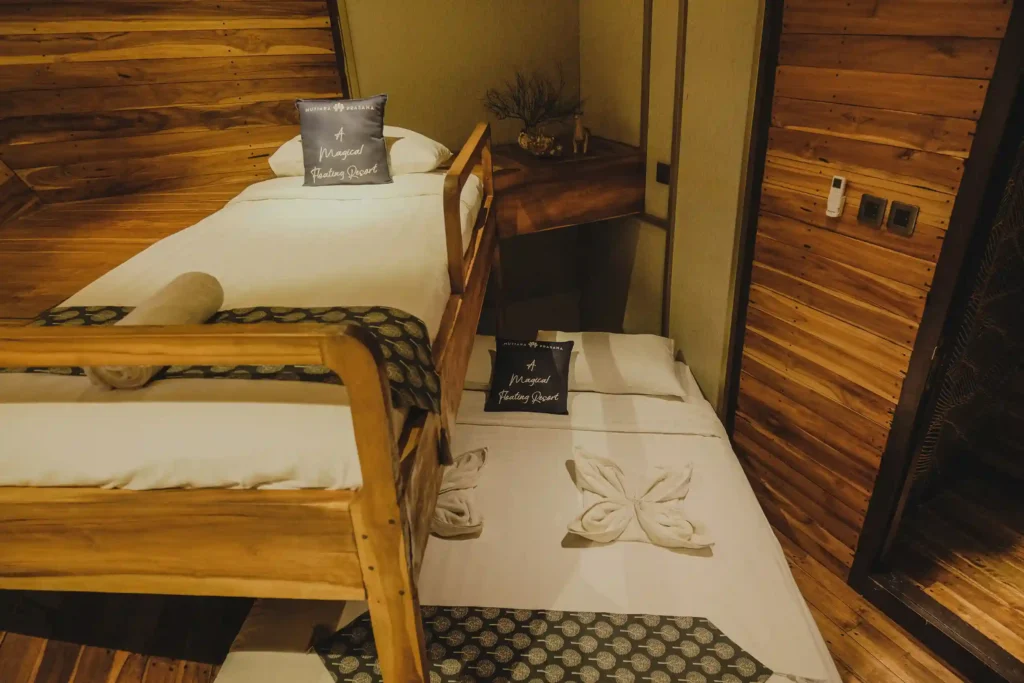
Pink Beach as a dive site runs 5–20 metres with light to moderate current and suits all levels — a shallow coral garden with anthias and turtles rather than a big-animal site. It is a good check dive and an excellent snorkel, and it is one of the few park stops that works equally well for divers, snorkellers and people who simply want to swim — which matters on a charter where the group’s abilities are mixed. The cabin plan and capacity that shape those group decisions are on the deck plan page. Taka Makassar’s reef edge is shallow and easy, and works well as the gentle stop after a drift at Karang Makassar.
Two practical notes. The pink is subtler in person than on social media — the strongest colour is usually at the waterline where wet sand concentrates the coral fragments. And there is no shade and no facilities at either stop, so sun protection, water and a rash vest matter more than they sound. What the boat supplies and what you carry is set out in our charter packing guide.
Fees and the rest of the park
Both stops sit inside Komodo National Park. Entry under PP No. 36/2024 is Rp 250,000 per foreign visitor per visit and Rp 50,000 or Rp 75,000 for Indonesian visitors depending on the day. Operators separately collect site bundles — USD 100 for Komodo and Padar combined, USD 40 for Rinca, USD 25 for Gili Lawa. The park covers roughly 1,817 km² of land and sea, has been a UNESCO World Heritage Site since 1991, and holds more than 1,000 reef fish species and more than 250 coral species as part of the Coral Triangle.
Where the pink sand sits relative to the dragon treks and the ranger fees is covered in our Komodo and Rinca trek guide.
Next step
If the numbers above fit your group, the next move is a written hold on the dates. Email sales@komodoluxury.com with your group size and window, or message +62 811 3823 875. Bookings confirm on a 50% deposit, with the balance due 30 days before departure.
Rate and specification figures on this page come from the operator’s published Mutiara Cruise Phinisi listing and were checked on 1 August 2026. Charter rates are reviewed annually. Ask for the current sheet in writing before paying anything.
Frequently asked questions
What is the best time of day to visit Pink Beach?
Early morning or late afternoon. The pink reads strongest in low, angled light and washes out under hard midday sun, which is exactly when boats leaving Labuan Bajo on 10:00 and 10:30 schedules tend to arrive.
Does Taka Makassar disappear at high tide?
Largely, yes. It is a sandbar rather than an island, so the exposed crescent shrinks as the water rises. A charter can check the tide and move the stop rather than arriving to find the sand submerged.
Is Pink Beach good for snorkelling?
Yes. As a dive and snorkel site it runs 5–20 metres with light to moderate current and suits all levels — a shallow coral garden with anthias and turtles rather than a big-animal site.
How far is Taka Makassar from Manta Point?
About 20 to 30 minutes by boat. The two stops often trade places in the day’s order depending on current and wind, which is a normal operational decision rather than a change of plan.
Why does Pink Beach look less pink in person?
Because the colour comes from red coral fragments mixed through white sand, and it is strongest at the waterline where the sand is wet. Photographs taken in low sun exaggerate an effect that is genuinely subtler in daylight.